The NZ student visa changes introduced on 27 October 2026 affect research master’s work rights, English language assessment, visa processing and some visa expiry dates. Here is what international students need to know before applying, renewing their visa or planning work during study.
The key point: Unlimited work rights during study have been removed for new research master’s student visa applications made on or after 27 October 2026. Check your own eVisa before making changes to your working hours.
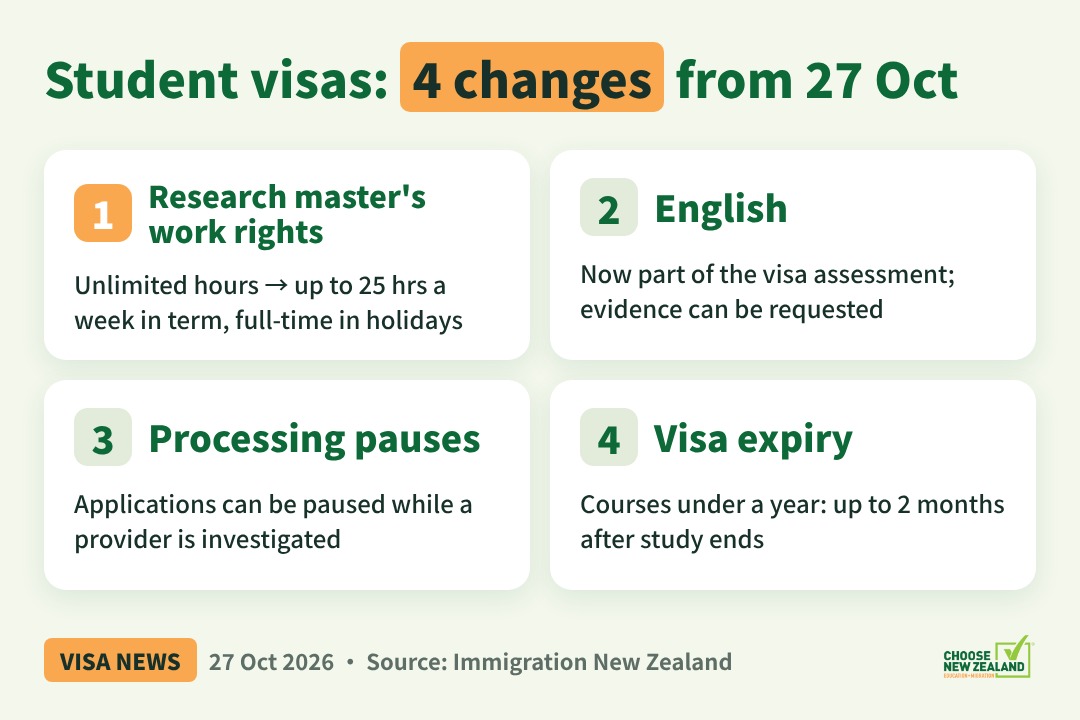
NZ Student Visa Changes at a Glance
| Area | What changed | What students should do |
|---|---|---|
| Research master’s work rights | Unlimited in-study work rights have been removed for new applications covered by the change. | Plan around permitted part-time hours during study and check holiday work conditions. |
| English language assessment | English ability is explicitly considered when assessing whether students can meet visa conditions. | Prepare evidence explaining how you meet your programme’s English requirements. |
| Processing suspensions | INZ can suspend processing in a broader range of circumstances involving provider compliance. | Check your provider’s status and seek advice if your application is affected. |
| Visa expiry | The one-month post-course period increases to two months where that expiry rule applies. The separate 31 March setting is unchanged. | Check the actual expiry date and work conditions on your eVisa. |
Source: Immigration New Zealand’s announcement of 27 October 2026 .
NZ Student Visa Changes for Research Master’s Students
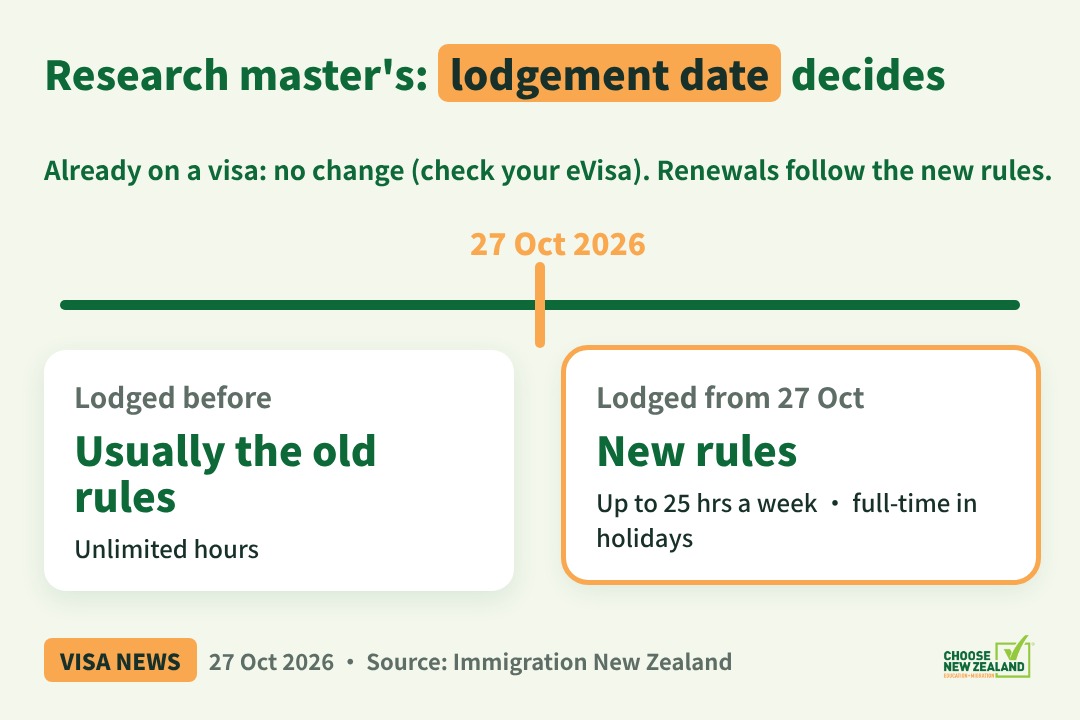
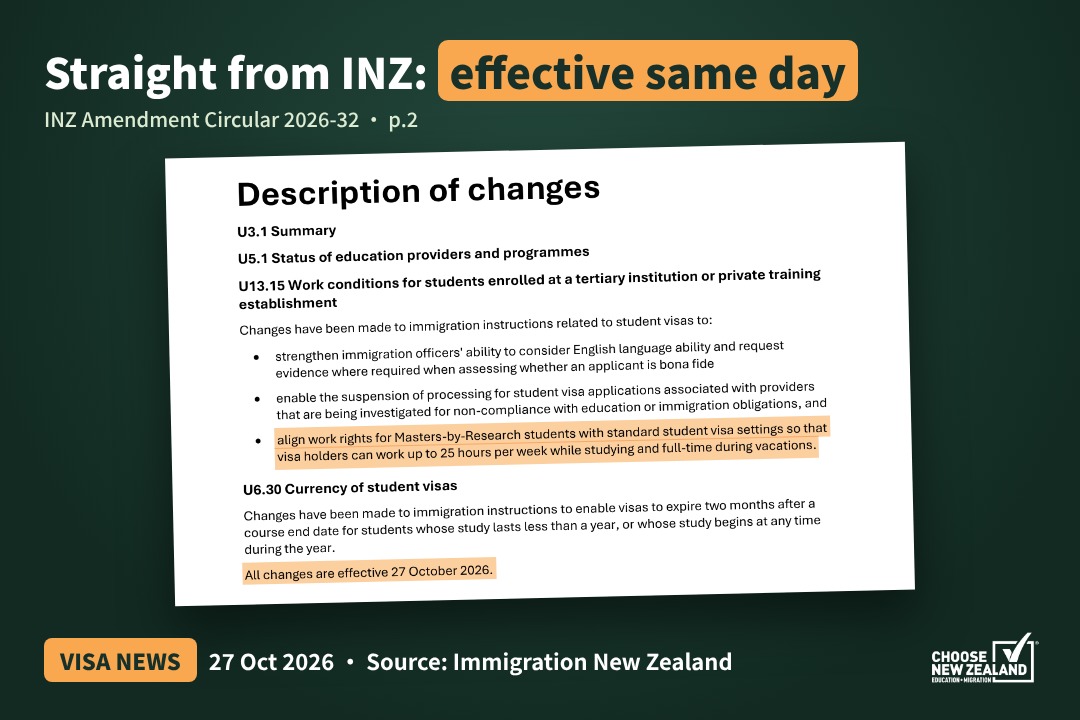
For student visa applications made on or after 27 October 2026, research master’s students no longer receive unlimited work rights during study.
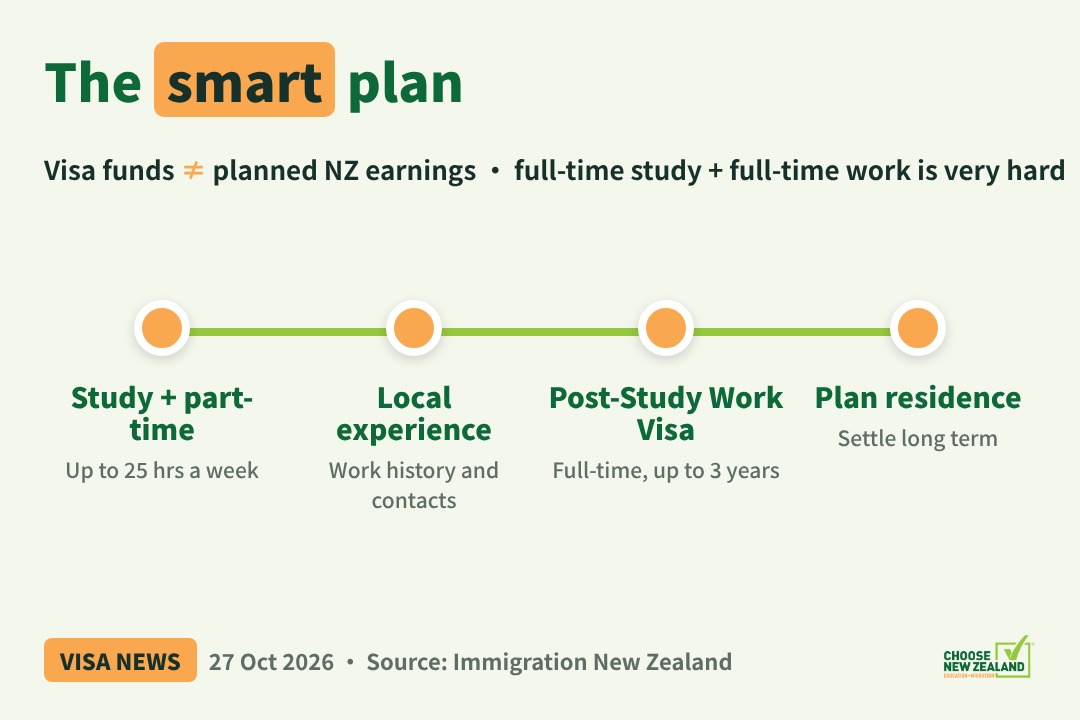
Standard settings allow up to 25 hours of work a week while studying, with full-time work during eligible holidays, subject to visa conditions.
Do not assume every break in research counts as a holiday. Confirm your programme’s scheduled breaks with your provider and check your eVisa before accepting additional hours.
What if you already hold a student visa?
The announcement limits the research master’s work-rights change to new student visas where applications were made on or after 27 October 2026.
Check your current eVisa before changing your work arrangements. If you apply for another student visa, confirm which conditions will apply to that application.
Are PhD students affected?
INZ’s published guidance continues to allow unlimited work hours for PhD students. They must maintain full-time study.
Read the official guidance on working on a student visa .
Is IELTS Now Compulsory for a New Zealand Student Visa?
The October announcement does not introduce a universal IELTS requirement or a new minimum test score. It strengthens the role of English ability in the visa assessment.
A provider’s decision to admit you without IELTS does not guarantee that INZ will require no further evidence. Prepare documents explaining how you meet your programme’s English requirements, such as accepted test results or relevant academic evidence.
Check both your provider’s admission requirements and the evidence needed for your visa application. INZ’s Fee Paying Student Visa guidance explains that English test results are not mandatory in every case but can assist its assessment.
Could Your Education Provider Affect Visa Processing?
Yes. INZ can suspend processing in a broader range of circumstances, including while an education provider’s potential non-compliance is being determined.
A complete application may still face a provider-related delay. Before committing to a programme, confirm your provider’s approval status and ask about any known issues affecting international enrolments.
If processing is suspended, seek advice before withdrawing your application or changing providers.
Do All Student Visas Now Last Two Months After Study?
No. The change extends the post-course period from one month to two months where the course-end-date expiry rule applies. The separate 31 March setting remains unchanged.
Your actual expiry date is the date on your eVisa. Extra time to remain in New Zealand does not automatically grant unrestricted work rights.
How Should You Budget for Studying in New Zealand?
Choose a course with a funding plan that supports your studies even if finding part-time work takes longer than expected.
For self-funded tertiary students, INZ currently specifies the following living funds:
| Study duration | Living funds requirement |
|---|---|
| One year or more | NZ$20,000 for each year |
| Less than one year | NZ$1,667 for each month |
These amounts are separate from tuition fees and other applicable requirements. Acceptable sponsorship or other approved funding arrangements may apply.
Build room for accommodation, transport, insurance and unexpected expenses. Paid work can help you gain experience, but avoid depending on immediate employment after arrival.
Can You Work Full-Time After Completing Your Master’s?
Eligible graduates may apply for a Post-Study Work Visa , allowing work in New Zealand for up to three years depending on qualification and study circumstances.
INZ generally requires degree-level qualifications at Level 7 or above to have been studied full-time in New Zealand for at least 30 weeks.
Completing a course does not automatically grant a work visa. Check eligibility and application timing before your student visa expires. Employment and residence depend on separate requirements and are not guaranteed.
Can Your Partner Work While You Study?
Partner work eligibility depends on your qualification and the partnership visa requirements.
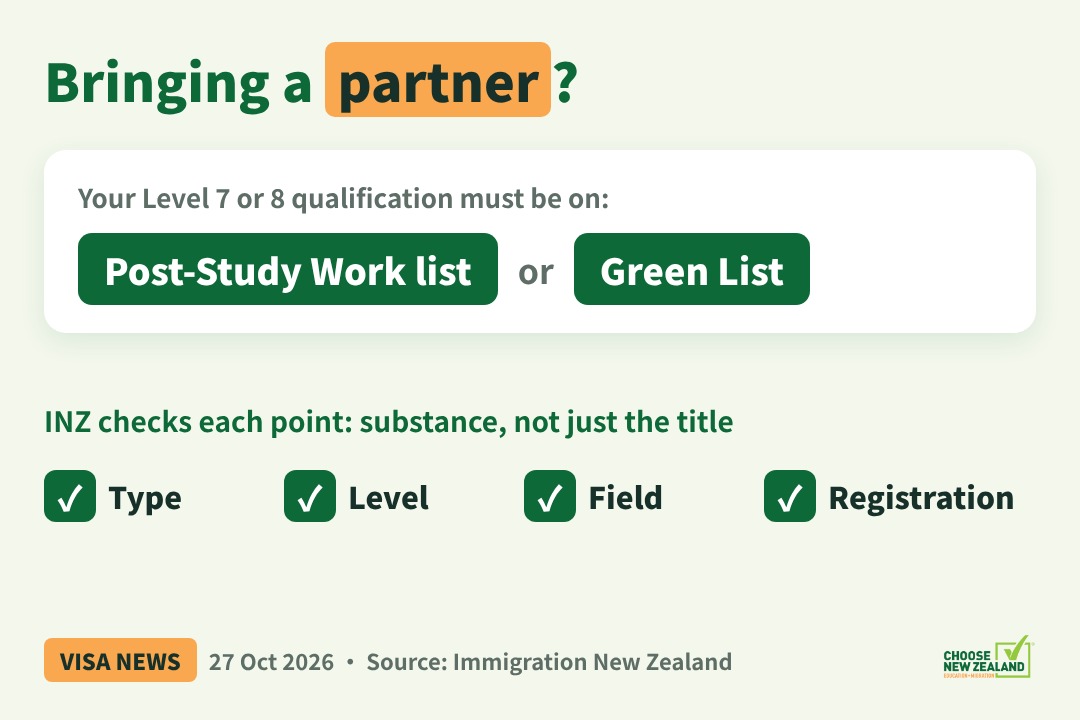
Students studying a Level 9 master’s or Level 10 doctoral qualification may support a partner’s work visa application.
For Level 7 or Level 8 study, only specified qualifications qualify under the relevant rules. Check your exact qualification and applicable list requirements. Do not assume every bachelor’s degree or diploma qualifies.
Partner visa eligibility is separate from the four October changes. Read INZ’s guidance on bringing family on a student visa .
How to Prepare for the NZ Student Visa Changes
Review how the NZ student visa changes affect your work rights, English evidence, funding and study plans.
- Check your application date and eVisa. Confirm your permitted work hours.
- Choose a suitable programme. Compare academic content, career relevance, cost and study commitments.
- Prepare English evidence. Understand both admission and visa requirements.
- Confirm funding. Avoid depending on an immediate job after arrival.
- Assess family eligibility. Check your partner’s options against your exact qualification.
- Plan for graduation. Understand your next visa options and deadlines early.
Discuss Your Study Plans with Choose New Zealand
Need help understanding these changes? Choose New Zealand can help you compare study options, while our licensed immigration advisers can assess visa questions based on your circumstances.
Email: info@choosenewzealand.com WhatsApp: +64 22 043 3907 Phone: +64 9 520 4329
Frequently Asked Questions
When did the NZ student visa changes take effect?
The changes took effect on 27 October 2026. The research master’s work-rights change applies to new student visa applications made on or after that date.
Can research master’s students work more than 25 hours during study?
New applications covered by the change receive standard in-study work conditions, rather than unlimited hours. Check your own eVisa; eligible full-time holiday work is a separate provision.
Does an IELTS waiver guarantee visa approval?
No. Admission and visa assessment are separate decisions. INZ may seek evidence about your English ability even where a provider has waived a test.
Does every student receive two extra months after their course?
No. The change extends the previous one-month post-course period to two months where that expiry rule applies. The separate 31 March setting is unchanged. Check your eVisa for your actual expiry date.
Does study guarantee a Post-Study Work Visa or residence?
No. Post-study work and residence applications have separate eligibility requirements. Review your qualification, study duration and individual circumstances before committing to a pathway.
Further Reading
- New Zealand student visa processing times
- Preparing for a New Zealand student visa interview
- Pathway Student Visa changes from July 2026
Sources
- INZ: Changes to student visas — 27 October 2026
- INZ: Working on a student visa
- INZ: Fee Paying Student Visa
- INZ: Post-Study Work Visa
- INZ: Bringing family on a student visa
Information checked on 29 October 2026. This article provides general information. Visa eligibility depends on your circumstances and the immigration requirements that apply to your application.